
Article: Why Do Guests Never Leave Empty-Handed? The Meaning Behind Thamboolam
Why Do Guests Never Leave Empty-Handed? The Meaning Behind Thamboolam

Think back to the last wedding, festival or pooja you attended.
Just as you were getting ready to leave, someone from the host’s family probably stopped you and placed a small bag, plate or bundle in your hands.
“Take this with you.”
Inside, there may have been betel leaves, areca nut, turmeric, kumkum, a fruit, flowers or something sweet.
You may have called it a return gift. But for generations, it has meant something much more.
It is called Thamboolam—a traditional way of saying:
You came. You were welcomed. Now, take a little of this celebration home with you.
What is Thamboolam?
Thamboolam is a customary offering presented to guests during weddings, religious ceremonies, Navaratri visits, housewarmings and other auspicious occasions.
The practice is especially familiar across South Indian households, although the items and presentation may vary between families and regions.
At its heart, Thamboolam is an expression of gratitude and goodwill. It acknowledges that the guest’s presence added meaning to the occasion.
The celebration does not end when the guest leaves. A small part of it travels home with them.
What is traditionally included in Thamboolam?
A traditional Thamboolam commonly includes:
-
Betel leaves
-
Areca nut
-
Turmeric
-
Kumkum
-
Flowers
-
Fruits, often bananas or coconuts
-
Sweets
-
A small token or useful household item
During Navaratri, it may also include sundal, blouse material, bangles, mirrors, combs or other thoughtful gifts.
The exact contents are not the most important part of the tradition. What matters is the intention with which they are offered.
The meaning behind each item
Many of the familiar items in a Thamboolam carry symbolic meaning.
- Betel leaves and areca nut have traditionally been associated with hospitality, respect and auspicious beginnings.
- Turmeric represents prosperity, purity and well-being.
- Kumkum is offered as a symbol of blessings and auspiciousness.
- Fruits and sweets reflect abundance and the hope that life continues to be filled with sweetness.
Even the smallest Thamboolam is therefore not simply a collection of objects. It is a bundle of good wishes offered with care.
More than a return gift
Today, the phrase “return gift” is commonly used for something given to guests before they leave. But Thamboolam carries a warmer and more personal meaning.
It is not a transaction or an exchange of equal value.
The host does not give it because the guest brought a present. It is given because the guest came, shared the moment and became part of the celebration.
That is why our grandparents rarely allowed anyone to leave empty-handed.
It may have been a banana, a little kumkum, a handful of flowers or a small packet of sweets. Whatever they had, they shared.
The gift might have been simple. The feeling behind it never was.
A memory many of us share
For many of us, Thamboolam brings back a familiar scene.
A grandmother carefully folds two betel leaves. Someone adds turmeric and kumkum. A child runs in with a fruit or sweet. The guest says, “This is not necessary,” while accepting it with a smile.
It is an ordinary moment that we may not have noticed when we were younger.
Only later do we understand what it meant.
It was a way of making sure that no one left feeling like an outsider. Everyone who entered the home was received with respect and sent away with blessings.
Thamboolam during Navaratri
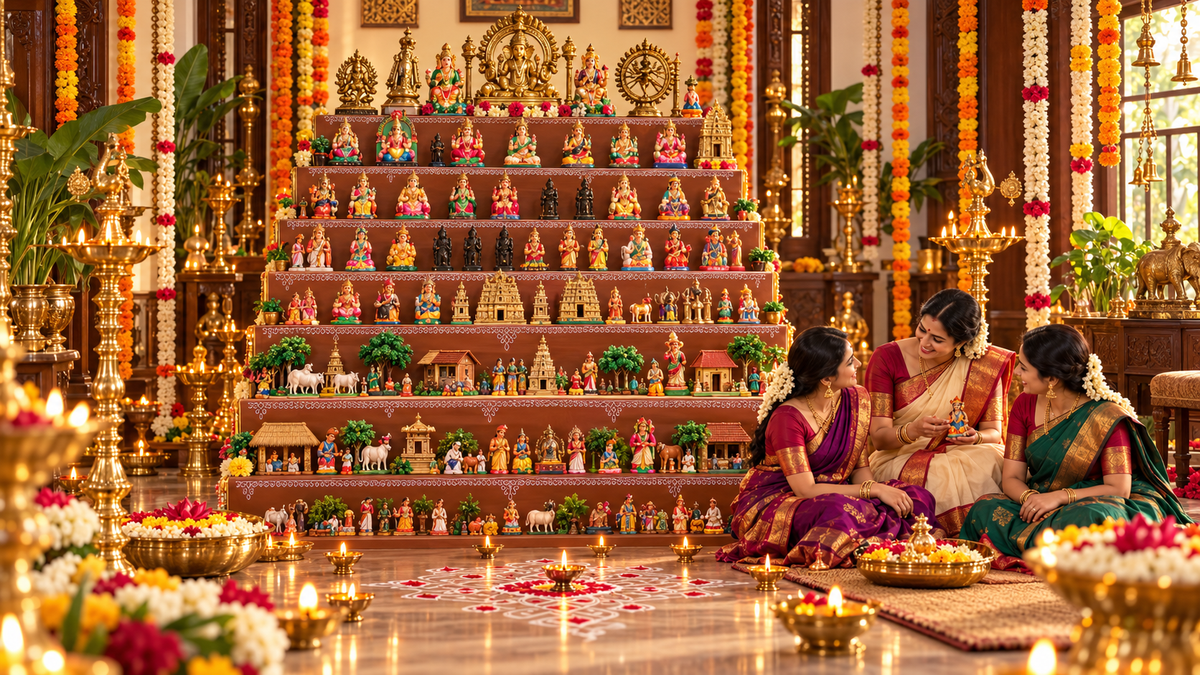
During Navaratri, families invite friends, relatives and neighbours to view the Golu, sing devotional songs and share sundal.
Before the guests leave, women are often offered Thamboolam.
In this setting, it becomes part of the larger spirit of Navaratri—bringing people together, strengthening relationships and sharing happiness from one home to another.
The Thamboolam bag may be small, but it carries the memory of the visit long after the festival is over.
A tradition that still feels relevant
The contents of Thamboolam may have changed over time. Traditional offerings are now sometimes accompanied by small plants, handcrafted products, reusable bags or personalised gifts.
Yet its meaning remains beautifully relevant.
In a world where celebrations can easily become about decoration and presentation, Thamboolam reminds us that hospitality is about how people feel when they leave.
Were they welcomed?
Were they included?
Did they take home a little happiness?
That is the true gift.
Nobody leaves with nothing
Thamboolam is not measured by its size, price or packaging.
It is a simple gesture that says:
Thank you for coming. Your presence mattered. May you carry our happiness and good wishes home with you.
Perhaps that is why this tradition continues across generations. Because some gifts are not meant to impress.
They are meant to make people feel remembered.
Thamboolam because nobody leaves with nothing.
Discover more stories behind the traditions we grew up with at Gokul Santol.

Leave a comment
This site is protected by hCaptcha and the hCaptcha Privacy Policy and Terms of Service apply.